ARCHANGELS:
Michael, Raziel and Zadkiel
COLOUR:
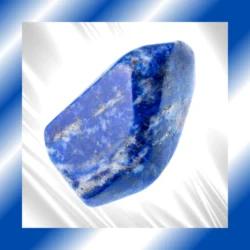
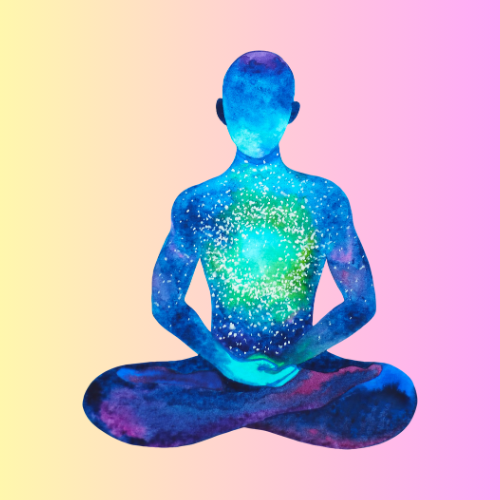
Dark blue with gold and white specks
THE ORIGINS:
History and Mythology
Origins and meaning of the name
Lapis lazuli: the blue stone of the sky and the gods
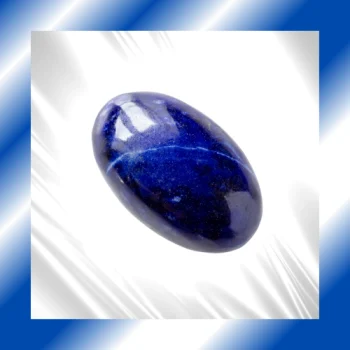
Lapis lazuli is a deep blue-coloured gemstone with golden and white veins, valued since ancient times for its beauty and spiritual significance. Used as early as 7000 B.C., this stone has been used in jewellery, sacred objects, pigments for art and protective amulets.
What is Lapis Lazuli
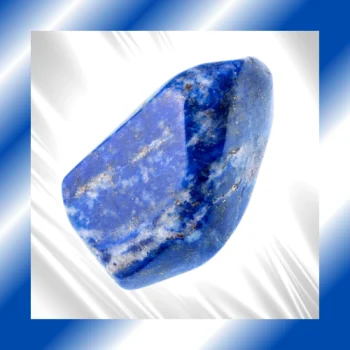
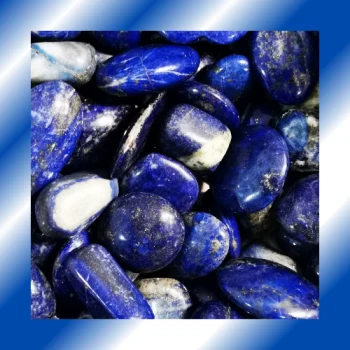
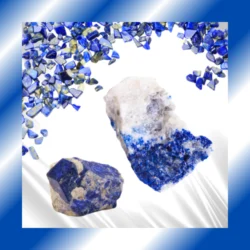
Lapis lazuli is a deep blue opaque gemstone known for its beauty and historical significance. The name is derived from "lapis" (Latin for "stone") and "lazhuward" (Persian for "blue"). It is actually a metamorphic rock, composed mainly of lazurite, along with pyrite (which gives golden highlights) and calcite (responsible for the white veins).
History and significance
Lapis lazuli has a strong connection to spirituality, wisdom and truth. It was considered sacred by the ancient Egyptians, who used it in jewellery, funerary scarabs and royal decorations such as Tutankhamun's mask. According to the Sumerians and Babylonians, it had protective powers, while in Persia it was known as the "stone of heaven."
In Christianity, it is associated with the Virgin Mary, and in the Renaissance it was used to create the precious ultramarine blue pigment, more expensive than gold, used in works such as Vermeer's The Girl with the Pearl Earring or Van Gogh's Starry Night.
Modern meaning and uses
Today, lapis lazuli is loved for its metaphysical properties: it is said to promote authentic communication, mental clarity and inner harmony. It is used in crystal therapy, jewellery and meditation, as well as being a much sought-after decorative element.
Formation and Origin
Lapis lazuli is a metamorphic rock, composed mainly of lazurite, with traces of pyrite (which gives the typical golden spots) and calcite. It forms within marble through contact metamorphism processes, where high temperatures and pressures transform the limestone.
Main colour
Origin of blue
The famous deep blue comes from lazurite, which absorbs red and green light while reflecting blue. Pyrite inclusions give golden reflections, while calcite creates white veins. Together, these elements resemble a starry sky.
Main sources
The most renowned mines are located in Afghanistan (especially in Sar-e-Sang), but also in Chile, Russia, Pakistan, and other countries such as Italy, India and the US.
Value and quality
Factors that determine the value of Lapis lazuli:
Colour: A deep blue with slight golden inclusions is the most valuable.
Purity: Pyrite can increase the value; too much calcite reduces it.
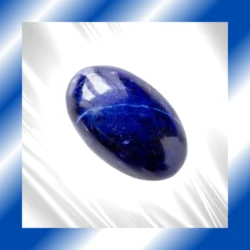
Cut: Often cabochon or beaded. Also decorative carvings.
Treatments: Can be dyed and treated with oil or wax to improve its appearance and durability.
Weight: The most valuable stones are generally under 10 carats, but huge specimens exist.
Chakra:
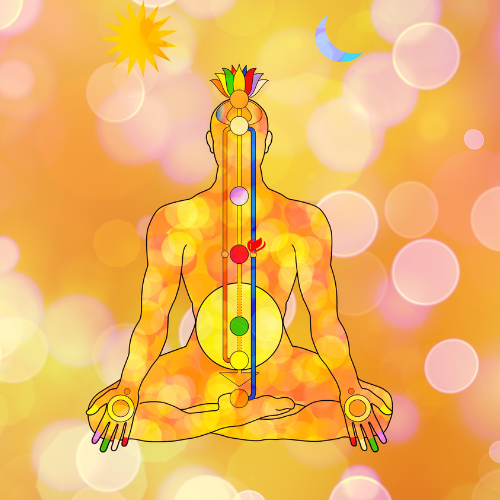
5th VISHUDDHA - the throat
Lapis lazuli is associated with the fifth chakra (Vishuddha), located in the throat, which is linked to communication, truth and personal expression. It helps improve the ability to express yourself, stimulates intuition and strengthens the connection between mind and heart.
PROPERTIES, CHARACTERISTICS AND BENEFITS:
Mineralogical Characteristics Physical and chemical properties
Composition: Mixture of minerals, mainly lazurite (25-40%), calcite, pyrite, and others such as diopside and mica.
Chemical formula: (Na,Ca)₈[(SO₄/S/Cl)₂/(AlSiO₄)₆] + Fe²⁺.
Crystal system: Cubic (lazurite is isometric).
Hardness: 5-5.5 on the Mohs scale.
Density: Between 2.70 and 2.90 g/cm³.
Refractive index: 1.50-1.55.
Glossiness: Subvitreous to matte.
Fracture: Irregular.
Neckline: Imperfect to nothing.
Luminescence: Variable fluorescence depending on the type of light.
Other properties:
Glossiness: Matte, waxy or glass-like
Fracture: Irregular
Strip: White
Transparency: Opaque or semi-transparent
Crystallinity: Absent (it is a mineraloid)
In crystal therapy, lapis lazuli is known for its balancing and expansive effect:
When placed on the third eye, it promotes intuition, spiritual enlightenment and lucidity in dreams.
Facilitates inner journeys and connections to personal power.
Protection and inner well-being
Lapis lazuli is one of the oldest and most powerful spiritual stones, known for its protective qualities and ability to instill inner peace. It is considered a shield against psychic attacks, quickly reduces stress and promotes a state of deep calm.
It promotes harmony and authentic self-awareness, encouraging sincere expression, honesty, compassion and a high sense of morality. It also stimulates mental clarity, objectivity and creativity, helping to communicate your truth with confidence and assurance.
For Sumerians, Babylonians and Egyptians it was sacred and protective.
It was associated with truth, wisdom, communication.
In crystal therapy it is said to promote concentration, emotional healing and personal expression.
It stimulates inner wisdom, intuition and spiritual growth. It is associated with the "Medicine Buddha" in Buddhism.
Physical Properties and Health
Physical benefits
Lapis lazuli offers a wide range of physical benefits:
Strengthens the immune system
Purifies blood and lowers blood pressure
Soothes inflammation and helps calm irritated or sore areas
Relieves insomnia, dizziness and depression
It has positive effects on:
respiratory and nervous systems
thyroid gland, vocal cords, throat
bone marrow and thymus
An interesting remedy: you can soak the stone in hot water, then use the cooled liquid for soothing eye compresses. When heated in the sun, the stone can reduce bruising and soothe insect bites.
It is also helpful in migraine headaches, neurological disorders and can benefit those with ADHD.
Common uses, in jewellery and art
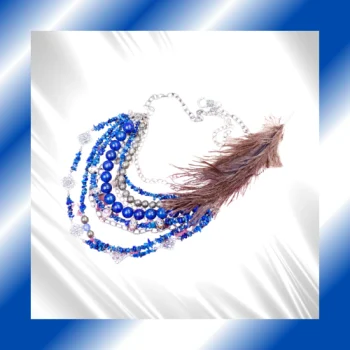
In jewellery: used for necklaces, rings, earrings, etc., due to its beauty and ease of cutting.
In art: used since the Middle Ages to create the pigment "ultramarine," famous in sacred paintings such as the Madonna's mantle.
Wear it on a short chain near the throat to benefit from its vibrations.
Avoid pairing it with turquoise, as their energies may conflict.
In energy treatments, it is applied to the throat chakra.
For meditation, it is recommended to use it with lavender incense in a quiet setting.
In summary
Lapis lazuli is much more than a beautiful blue stone: it is a symbol of wisdom, introspection, and spiritual beauty. With its fascinating physical properties and strong cultural significance, it continues to be loved by those seeking a gemstone with deep aesthetic and energetic value.
Lapis lazuli, known for its deep blue colour with golden highlights, is mined in different parts of the world. The historically most valuable source remains Afghanistan, particularly the mountains where it has been mined for millennia. Other mines are found in Chile, Russia (Siberia, Lake Bajkal), and to a lesser extent in Angola, Canada, Colorado (USA) and Pakistan.
Type andcommercial classification (in order of value)
Persian/Afghan lapis lazuli
Colour: deep, uniform, slightly purplish blue
Inclusions: little or no pyrite, no calcite
Quality: very high, perfect for fine jewellery
Price: about 20 € per carat
Russian / Siberian Lapis lazuli
Colour: varies from light blue to dark blue
Inclusions: presence of pyrite, possible calcite
Quality: average
Price: about 10 € per carat
Chilean Lapis Lazuli
Colour: medium blue, sometimes with greenish hues
They include obvious calcite veins
Quality: standard or commercial
Price: about €3 per carat
How to recognize the true Lapis lazuli
Some methods to distinguish it from imitations:
Stripe test: if it leaves a blue stripe on porcelain, it is authentic.
Touch test: remains cold on contact.
Hardness test: can scratch the glass.
Test with acetone: colour should not discolour.
Zodiac Signs
Astrologically connected to Taurus, Aquarius, Libra, Sagittarius and Capricorn.
CLEANING AND RECHARGING:
Care and maintenance
Cleaning with warm water, mild soap and soft brush.
Avoid chemicals, acids or exposure to the sun for long periods.
Store separately from other stones to avoid damage.