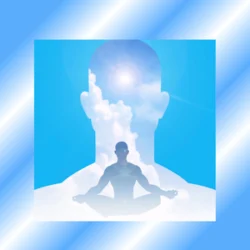
Do you want to learn how to meditate?

Do you want to learn how to meditate?

The meditative process: a journey toward the new self

The meditative process: a journey toward the new self

Origins of Meditation:
an ancient and universal journey

Meditation is a very ancient practice, with roots in various cultures and spiritual traditions, many of which developed independently from one another.
Although today it is often associated with yoga or mindfulness, its history is much broader and deeper.

Origins of Meditation:
an ancient and universal journey

Meditation is a very ancient practice, with roots in various cultures and spiritual traditions, many of which developed independently from one another.
Although today it is often associated with yoga or mindfulness, its history is much broader and deeper.

It consists of intentionally and consciously bringing the attention to the present moment, often through the breath, the body, a guiding thought or an inner image.

In simple words:

To meditate means “to know yourself” and “to cultivate your own self.”


Meditation and change: an inner journey

Change begins inside

Change means unlearning old mental patterns and learning new ones.
At the brain level, this involves:

Deactivating existing neural connections (unlearning)

Create new ones (learning)

The brain functions through electrochemical signals: when neurons activate, they generate brain waves, which vary depending on the mental state.


Meditation and change: an inner journey

Change begins inside

Change means unlearning old mental patterns and learning new ones.
At the brain level, this involves:

Deactivating existing neural connections (unlearning)

Create new ones (learning)

The brain functions through electrochemical signals: when neurons activate, they generate brain waves, which vary depending on the mental state.

Brain waves: from wakefulness to deep meditation

Beta Waves (22–50 Hz)

Active waking state

Three levels: low, medium and high frequencies

High betas, typical of anxiety, stress and fear are toxic in the long run

Too much beta activation = “survival mode” → mental and physical imbalance

Brain waves: from wakefulness to deep meditation

Beta Waves (22–50 Hz)

Active waking state

Three levels: low, medium and high frequencies

High betas, typical of anxiety, stress and fear are toxic in the long run

Too much beta activation = “survival mode” → mental and physical imbalance

Alpha Waves (8–12 Hz)

Relaxation and light meditation state

Favour imagination and creativity

The brain, in this state, does not distinguish between imagination and reality → ideal for visualisation

.

Theta Waves (4–8 Hz)

Half-awake/half-asleep state

Awake conscious mind, relaxed body

Access to the subconscious mind : it is the state of "mental reprogramming."

Children naturally live in theta: open, receptive and malleable

.

Delta Waves (0.5–4 Hz)

Deep sleep

Body in regeneration, absence of awareness

Expert mystics are able to meditate even in this state, remaining conscious.

Alpha Waves (8–12 Hz)

Relaxation and light meditation state

Favour imagination and creativity

The brain, in this state, does not distinguish between imagination and reality → ideal for visualisation
.

Theta Waves (4–8 Hz)

Half-awake/half-asleep state

Awake conscious mind, relaxed body

Access to the subconscious mind : it is the state of "mental reprogramming."

Children naturally live in theta: open, receptive and malleable
.

Delta Waves (0.5–4 Hz)

Deep sleep

Body in regeneration, absence of awareness

Expert mystics are able to meditate even in this state, remaining conscious.


Meditation as a return to the essential

Meditating means lowering the level of cerebral activity:

From stress (high beta waves) to calm (alpha and theta)

The analytical and judgemental thinking of the neocortex is transcended

The frontal lobe is activated in an orderly manner and the sense of space and time diminishes

A creative state is entered, where we can re-invent ourselves


Meditation as a return to the essential

Meditating means lowering the level of cerebral activity:

From stress (high beta waves) to calm (alpha and theta)

The analytical and judgemental thinking of the neocortex is transcended

The frontal lobe is activated in an orderly manner and the sense of space and time diminishes

A creative state is entered, where we can re-invent ourselves


Meditation = Re-write yourself


With guided meditation we can:

Deactivate some automatic mental patterns (fears, habits, reactions)

Access the subconscious to “uninstall” old beliefs and “install” new truths

Generate a more free, creative and centred self


Meditation = Re-write yourself

With guided meditation we can:

Deactivate some automatic mental patterns (fears, habits, reactions)

Access the subconscious to “uninstall” old beliefs and “install” new truths

Generate a more free, creative and centred self

The Meditative Process: inner transformation in practice

1. Recognise what is stopping you

Emotions linked to the past, if unresolved, condition the present.

Observe: which recurring thoughts give you anxiety, anger, sadness or fear?

These automatic emotions keep you prisoner of old experiences.

The Meditative Process: inner transformation in practice

1. Recognise what is stopping you

Emotions linked to the past, if unresolved, condition the present.

Observe: which recurring thoughts give you anxiety, anger, sadness or fear?

These automatic emotions keep you prisoner of old experiences.

2. Investigate the subconscious

Real change occurs inside, in the "operating system" of your subconscious mind.

The first step towards happiness is to stop feeding thoughts that cause you harm.

Meditating means knowing yourself and rewriting your inner identity.

2. Investigate the subconscious

Real change occurs inside, in the "operating system" of your subconscious mind.

The first step towards happiness is to stop feeding thoughts that cause you harm.

Meditating means knowing yourself and rewriting your inner identity.

3. Become aware of your thoughts

Every day observe your automatic thoughts, recognise the linked emotions.

What is the dominating thought? Which emotion accompanies it?

Bring all this to the light to transform it during meditation.

3. Become aware of your thoughts

Every day observe your automatic thoughts, recognise the linked emotions.

What is the dominating thought? Which emotion accompanies it?

Bring all this to the light to transform it during meditation.

4. Entrust the problem

During meditation, mentally “deliver” your block or pain to a superior entity, the universe or your deepest part.

It is a symbolic act of letting go of what is limiting you.

4. Entrust the problem

During meditation, mentally “deliver” your block or pain to a superior entity, the universe or your deepest part.

It is a symbolic act of letting go of what is limiting you.

5. Visualise your new self

Before meditation, ask yourself:

    • Who do I want to become?

    • How would the best version of myself be?

    • What do I wish to try or do?

This stimulates the brain to create new connections and possibilities.

5. Visualise your new self

Before meditation, ask yourself:

    • Who do I want to become?

    • How would the best version of myself be?

    • What do I wish to try or do?

This stimulates the brain to create new connections and possibilities.

6. Feel to create

During visualisation:

    • Imagine you are actually living that new experience.

    • The body reacts as if it is real, generating new emotions.

    • This synchronises mind and body.

6. Feel to create

During visualisation:

    • Imagine you are actually living that new experience.

    • The body reacts as if it is real, generating new emotions.

    • This synchronises mind and body.

7. Consistency = Transformation

Repeating this process for at least 3 weeks, with gratitude and presence:

    • Creates new emotional and neurological habits

    • The brain settles into a new identity

    • External reality starts reflecting these inner changes

7. Consistency = Transformation

Repeating this process for at least 3 weeks, with gratitude and presence:

    • Creates new emotional and neurological habits

    • The brain settles into a new identity

    • External reality starts reflecting these inner changes

8. The mind creates reality

When you maintain your new emotional state, even if reality has not yet changed:

    • New genes activate

    • The energy field around you changes

    • New experiences are attracted : reality adapts to your inner state

This is the quantum law starting to co-create with you: thought + emotion = new reality.

8. The mind creates reality

When you maintain your new emotional state, even if reality has not yet changed:

    • New genes activate

    • The energy field around you changes

    • New experiences are attracted : reality adapts to your inner state

This is the quantum law starting to co-create with you: thought + emotion = new reality.

Guided meditation is not only about relaxation:
it is an active process, involving healing, transformation and aware creation.

Guided meditation is not only about relaxation:
it is an active process, involving healing, transformation and aware creation.

WHEN SHOULD YOU MEDITATE?

Ideal times:

  • In the morning as soon as you wake up: the mind is more receptive.

  • In the evening before sleeping : the brain is more relaxed.

  • Even during the day, if you are in a calm environment and guided by an experienced voice.

.

PRIMARY GOAL

Change your personality, stop living on autopilot.
Only by breaking old mental routines can you make space for a new version of yourself.
The meditative process is not an escape from reality, but a way of creating a new one, aligned with your true essence.

.

THE BENEFITS OF MEDITATION:

1. IT FREES US FROM THE PAST

The first step toward change is recognizing the emotions and automatic thoughts tied to the past that hold us back. Continuing to think them means remaining anchored to experiences that generate suffering. Meditation then becomes a way to know yourself, care for yourself and access your subconscious, where unconscious emotional habits reside.

.

2. WE OBSERVE OURSELVES

During the day:

  • Note the the recurring thoughts that make you uncomfortable (anxiety, fear, sadness, anger).

  • Identify the dominating emotion linked to those thoughts.

  • Mentally prepare to symbolically deliver that emotion/thought to a superior guide, the universal energy or your elevated self during meditation.

.

3. WE IMAGINE A NEW SELF

Ask yourself:

  • Who do you want to become?

  • Which dreams would you like to come true?

  • Which qualities would you like to develop?

The brain responds to these questions by expanding: new neural connections are activated and begin generating new emotions linked to this “potential version” of you. During guided meditation, the body can react as if it were already living that experience, triggering real change at the cellular level.

.

4. THE MIND AND BODY WORK TOGETHER

When you intensely imagine a new reality and you feel the linked emotions, your body starts to change like that reality is already true. This mind-body alignment activates genes and brings lasting changes. It is a quantum physics principle: the field responds to your vibration.

.

MEDITATION STEPS

1: INDUCTION

  • To change the mental state from analytical (beta waves) to receptive (alpha waves).

  • This is done sitting down, straight back, closed eyes.

  • Through the perception of the body in space (proprioception), you enter the subconscious, bypassing the rational mind.

  • The cerebellum, the seat of the subconscious, is activated by focusing on the body in the present moment.

Objective : switch off automatic thought, activate sensory awareness, enter the “here and now”.

.

2: RECOGNITION

Honesty phase. We ask questions to get to know ourselves deeply:

  • What type of person have I been?

  • How do others see me?

  • Who am I really?

  • What emotions do I fight daily?

  • Which parts of myself do I keep hidden?

  • What do I want to change?

Writing the answers in a notebook creates a deep dialogue with your authentic self.

.

3: REDIRECTION

This phase involves consciously intercepting self-sabotaging thoughts as soon as they appear during the day.

  • When a negative thought emerges, halt it immediately with a conscious and voluntary act.

  • Ever time you activate a negative mental pattern, the body enters an emergency state: consumes energy and strengthens fear.

  • Repeated thoughts and emotions become uncoscious habits that mould your reality.

  • This phase is training to break automatic patterns and take control of your mind.

.

4: CREATE A NEW VISION

After cleansing the mind from old patterns, it is time to plant new intentions.

  • Clearly imagine who you want to be, how you want to think, act and feel.

  • Be grateful and happy, like it is already real.

  • Feed heightened emotions: enthusiasm, love, gratitude.

  • Living “as if transforms your inner vibrations and attracts experiences aligned with your new identity.

First you cultivate the mind like a garden. Then you watch the fruits grow.

.

ACTIVATING QUESTIONS FOR THE FRONTAL LOBE

Stimulate creativity and inner vision with these questions:

  • What is the highest version of myself?

  • How would I behave if I were that person

  • Who do I admire and why?

  • Which new habits can I adapt?

  • How do I want to be remembered?

Answering these questions helps you build a new reality and imprint new directions on your brain.

.

THINK, ACT, FEEL: THE TRIAD OF TRANSFORMATION

  • How do I want to think daily?

  • How do I want to act in daily life?

  • How do I want to feel, energetically and emotionally?

Meditation becomes where you repeat your new self until it becomes your new reality.

.

THE QUANTUM PRINCIPLE OF CREATION

  • You are the quantum observer: your focused thought transforms possibilities into reality.

  • Hold the image of your desire in your mind for a few moments… then let it go.

  • Entrust the manifestation to your Higher Mind or the Universe. Don’t force the “how”: faith, gratitude and openness are your strengths.

.

LIVE AS IF IT ALREADY HAPPENED

  • Every day, check whether you are living like the person you wish to become.

  • Ask the Universe for signs and evidence, be ready to recognize them, and give thanks.

  • Enthusiasm, wonder and trust open the doors to the concrete manifestation of your desires

Knowledge+ Experience = Deep and lasting transformation.

.

✅ IN SUMMARY

Meditation guides you:

  1. From awareness of the past

  2. To breaking old patterns

  3. To building a new self

  4. To concrete creation of the reality you desire.

Each phase is interconnected and part of a system that accompanies you to live a fuller, more authentic and aware life.

WHEN SHOULD YOU MEDITATE?

Ideal times:

  • In the morning as soon as you wake up: the mind is more receptive.

  • In the evening before sleeping : the brain is more relaxed.

  • Even during the day, if you are in a calm environment and guided by an experienced voice.
    .

PRIMARY GOAL

Change your personality, stop living on autopilot.
Only by breaking old mental routines can you make space for a new version of yourself.
The meditative process is not an escape from reality, but a way of creating a new one, aligned with your true essence.

.

THE BENEFITS OF MEDITATION:

1. IT FREES US FROM THE PAST

The first step toward change is recognizing the emotions and automatic thoughts tied to the past that hold us back. Continuing to think them means remaining anchored to experiences that generate suffering. Meditation then becomes a way to know yourself, care for yourself and access your subconscious, where unconscious emotional habits reside.

.

2. WE OBSERVE OURSELVES

During the day:

  • Note the the recurring thoughts that make you uncomfortable (anxiety, fear, sadness, anger).

  • Identify the dominating emotion linked to those thoughts.

  • Mentally prepare to symbolically deliver that emotion/thought to a superior guide, the universal energy or your elevated self during meditation.

.

3. WE IMAGINE A NEW SELF

Ask yourself:

  • Who do you want to become?

  • Which dreams would you like to come true?

  • Which qualities would you like to develop?

The brain responds to these questions by expanding: new neural connections are activated and begin generating new emotions linked to this “potential version” of you. During guided meditation, the body can react as if it were already living that experience, triggering real change at the cellular level.

.

4. THE MIND AND BODY WORK TOGETHER

When you intensely imagine a new reality and you feel the linked emotions, your body starts to change like that reality is already true. This mind-body alignment activates genes and brings lasting changes. It is a quantum physics principle: the field responds to your vibration.
.

MEDITATION STEPS

1: INDUCTION

  • To change the mental state from analytical (beta waves) to receptive (alpha waves).

  • This is done sitting down, straight back, closed eyes.

  • Through the perception of the body in space (proprioception), you enter the subconscious, bypassing the rational mind.

  • The cerebellum, the seat of the subconscious, is activated by focusing on the body in the present moment.

Objective : switch off automatic thought, activate sensory awareness, enter the “here and now”.

.

2: RECOGNITION

Honesty phase. We ask questions to get to know ourselves deeply:

  • What type of person have I been?

  • How do others see me?

  • Who am I really?

  • What emotions do I fight daily?

  • Which parts of myself do I keep hidden?

  • What do I want to change?

Writing the answers in a notebook creates a deep dialogue with your authentic self.

.

3: REDIRECTION

This phase involves consciously intercepting self-sabotaging thoughts as soon as they appear during the day.

  • When a negative thought emerges, halt it immediately with a conscious and voluntary act.

  • Ever time you activate a negative mental pattern, the body enters an emergency state: consumes energy and strengthens fear.

  • Repeated thoughts and emotions become uncoscious habits that mould your reality.

  • This phase is training to break automatic patterns and take control of your mind.

.

4: CREATE A NEW VISION

After cleansing the mind from old patterns, it is time to plant new intentions.

  • Clearly imagine who you want to be, how you want to think, act and feel.

  • Be grateful and happy, like it is already real.

  • Feed heightened emotions: enthusiasm, love, gratitude.

  • Living “as if transforms your inner vibrations and attracts experiences aligned with your new identity.

First you cultivate the mind like a garden. Then you watch the fruits grow.
.

ACTIVATING QUESTIONS FOR THE FRONTAL LOBE

Stimulate creativity and inner vision with these questions:

  • What is the highest version of myself?

  • How would I behave if I were that person

  • Who do I admire and why?

  • Which new habits can I adapt?

  • How do I want to be remembered?

Answering these questions helps you build a new reality and imprint new directions on your brain.
.

THINK, ACT, FEEL: THE TRIAD OF TRANSFORMATION

  • How do I want to think daily?

  • How do I want to act in daily life?

  • How do I want to feel, energetically and emotionally?

Meditation becomes where you repeat your new self until it becomes your new reality.
.

THE QUANTUM PRINCIPLE OF CREATION

  • You are the quantum observer: your focused thought transforms possibilities into reality.

  • Hold the image of your desire in your mind for a few moments… then let it go.

  • Entrust the manifestation to your Higher Mind or the Universe. Don’t force the “how”: faith, gratitude and openness are your strengths.
    .

LIVE AS IF IT ALREADY HAPPENED

  • Every day, check whether you are living like the person you wish to become.

  • Ask the Universe for signs and evidence, be ready to recognize them, and give thanks.

  • Enthusiasm, wonder and trust open the doors to the concrete manifestation of your desires

Knowledge+ Experience = Deep and lasting transformation.

.

IN SUMMARY

Meditation guides you:

  1. From awareness of the past

  2. To breaking old patterns

  3. To building a new self

  4. To concrete creation of the reality you desire.

Each phase is interconnected and part of a system that accompanies you to live a fuller, more authentic and aware life.

DO YOU WANT TO LEARN HOW TO MEDITATE TO CHANGE YOUR WAY OF LIFE?

CONTACT US, OR GO TO THE PAGE ONLINE COURSES - MEDITATIONS

DO YOU WANT TO LEARN HOW TO MEDITATE TO CHANGE YOUR WAY OF LIFE?

CONTACT US, OR GO TO THE PAGE ONLINE COURSES - MEDITATIONS