JADE



Info and advice
Info and advice
Info and advice
ARCHANGELS:
Raphael and Raziel
COLOURS:
Green, lavender, white, black, yellow, red, brown and blue.
THE ORIGINS:
History and Mythology
Origins and meaning of the name
History, variety and significance of a thousand-year-old stone
Jade is a fascinating gemstone, revered for thousands of years in various cultures around the world for its beauty and symbolic and healing properties. Often associated with luck, health and spirituality, it is a gemstone that combines deep cultural meanings with extraordinary natural elegance.
.
The two varieties: jadeite and nephrite
The term "Jade" actually refers to two separate minerals:
Jadeite, the rarest and most valuable variety, with bright colours and greater transparency.
Nephrite, more common and less bright, but very durable.
Although they share a green color, they differ in chemical composition, hardness and value.
.
Origins and meaning of the name:
The name "Jade" comes from the Spanish expression "Piedra de Ijada," or "stone of the hips," since it was believed to help treat kidney pain. In fact, the Greek term "Nephrite" also refers to the kidney s(nephros), emphasizing the ancient therapeutic use of this stone.
In China it is called "Yu," meaning "heavenly" or "imperial," reflecting its sacredness and noble role in Eastern culture. It was considered a symbol of purity, immortality and inner harmony.
.
Meaning and Symbolism:
Jade is traditionally considered:
Good luck charm and talisman of abundance and health
Stone related to the heart chakra, love and serenity
An ideal gift for weddings, birthdays, new life stages or spiritual events
In China, jade is a symbol of purity, harmony, virtue and immortality. Considered more precious than gold.
In ancient times, Mayans and Aztecs used it to treat side pains in the body - hence the name "hip stone" (piedra de ijada).
In Feng Shui, it promotes prosperity, health and protection.
It is believed to reflect the soul of the wearer, shining in serene times and dimming in difficult ones.
Often used in protective bracelets - they are said to break instead of the body, protecting the wearer.
For the Aztecs and Maya, jade was sacred, connected to spirituality and the life-death cycle.
Confucius described it as the embodiment of the moral virtues: kindness, honesty, wisdom, courage and modesty.
.
History and significance:
A thousand-year journey through the history of jade
Jade has accompanied humanity for more than 7,000 years, initially used to make weapons and tools in various ancient civilizations, especially in East Asia and Central America.
In China, jade (represented by the character "Yu" as early as 2000 B.C.) had a strong spiritual value. It symbolized the connection between nature and heaven, and was often carved in the forms of sacred animals such as dragons and turtles.
With the Zhou dynasty, the significance of jade shifted from the spiritual to the social plane, becoming a symbol of status and prestige. A notable example are the lavish jade funerary robes reserved for the Han Dynasty imperial elite, made from thousands of tiles.
In the 18th century, Emperor Qianlong, who was a great fan of jade, collected large numbers of it and even wrote poems celebrating it.
The Maya also considered it a sacred stone, reserved exclusively for rulers and elders. They made ritual masks, scepters and pendants with it, often related to the worship of the sun god, Kinich Ahau.
A crucial step in the modern history of jade came in 1863, when French mineralogist Alexis Damour discovered that the two main varieties, jadeite and nephrite, had distinct chemical compositions. This discovery paved the way for the modern scientific understanding of jade formation.
.
History and cultural uses:
Uses and craftsmanship beauty
Very workable: carved into traditional figures (dragons, Buddhas, butterflies...), jewellery, accessories, practical objects.
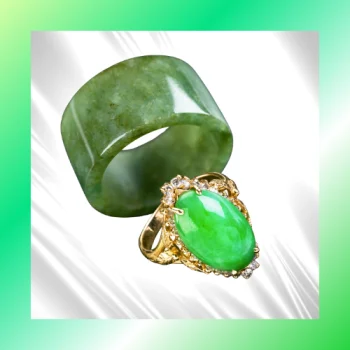
Jewellery for men and women, from delicate pendants to massive rings and cabochons.
Famous pieces such as the "Doubly fortunate necklace" (sold for over $9 million) and the "Jade Cabbage" show its cultural and artistic magnificence.
.
Composition and Formation:
Treatments and quality
Jade can undergo treatments to improve its appearance: acid bleaching, polymer impregnation and dyeing.
The grade of the jadeite indicates how natural it is:
Grade A: natural, not dyed or impregnated
Grade B: bleached and impregnated, but not dyed
Grade C: dyed and impregnated
Grade D: not authentic jadeite
.
Colour and Appearance:
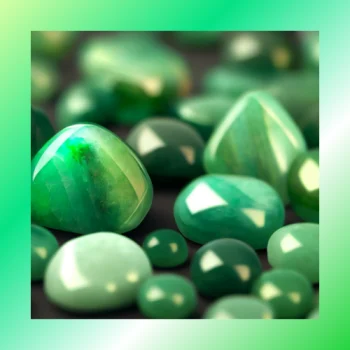
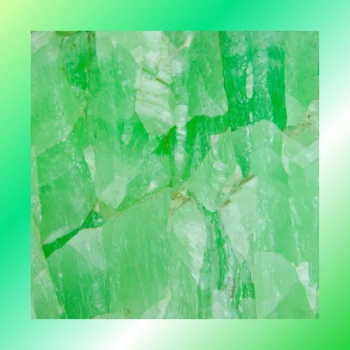
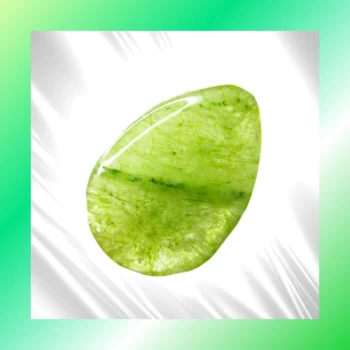
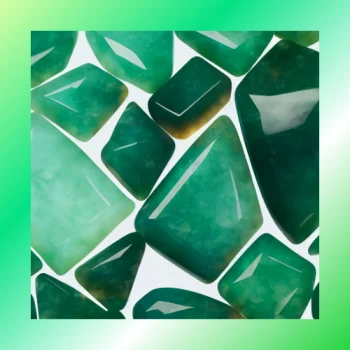
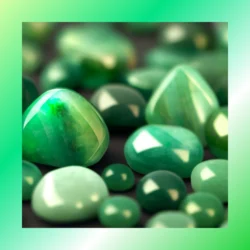
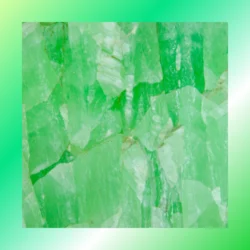
Jade comes in many hues: green, lavender, white, black, orange, yellow, and gray.
The most coveted colour by far is the vivid, semi-transparent emerald green, known as Imperial Jade, sourced exclusively from Myanmar (Burma).
In different cultures, colour preferences vary:
West: deep green
Far East: pure white, yellow with pinkish hues, imperial green
.
Primary sources:
Provenance - Geographical origin
Jadeite forms deep underground under heat and pressure, while nephrite forms closer to the surface.
Most of the world's jadeite comes from Myanmar, the only source of the rare imperial jade.
Other producing countries include Canada, Japan, China, Russia, Guatemala, Brazil and the United States.
Jadeite: Myanmar (exclusive source of the imperial), Guatemala, Japan, Russia, USA...
Nephrite: most widespread - found in China, New Zealand, Canada, Russia, Australia, Poland, etc.
.
Type, Cut and Use
Due to its abundance and workability:
It is widely used for mosaics, wall tiles and decorative objects
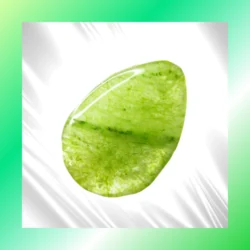
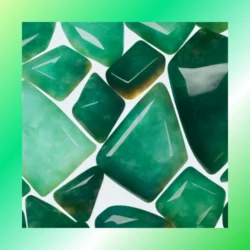
In jewellery, it is mostly cut into cabochons (oval, drop or spherical shape)
It has also been used in monumental architecture, as in the columns of St. Isaac's Cathedral in St. Petersburg or the Uffizi and St. Peter's in Italy.
.
What is the most valuable jade?
Imperial Jade (deep emerald green, semi-transparent jadeite) is considered the rarest and most coveted quality, sourced mainly from:
Burma (Myanmar)
Yunnan (China)
Guatemala
It has a hardness of 7 on the Mohs scale, is very durable and is perfect for creating fine jewellery.
.
Chakra:
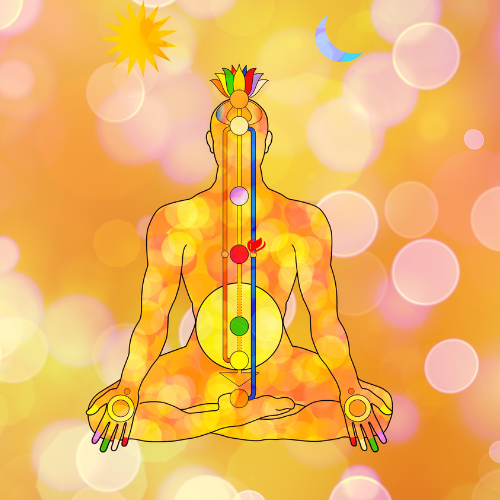
4th ANAHATA - the heart
✅ Activation of chakras: Stone related to the heart chakra, love and serenity
.
PROPERTIES, CHARACTERISTICS AND BENEFITS:
Mineralogical Characteristics:
Jadeite: rarer, harder (6.5-7 Mohs), glassy luster, intense colour.
Nephrite: more common, slightly less hard (6-6.5 Mohs), waxy or oily sheen.
Both are incredibly tough, that is, impact resistant, due to the interconnected crystal structure.
.
Technical characteristics:
Outward appearance: often misleading. Many similar materials are passed off as jade.
Specific gravity test: the most reliable method to distinguish it from imitations.
Sound test (music box): by lightly striking the material, nephrite makes a musical sound, while jadeite does not.
Hardness (Mohs Scale):
Jadeite: 6.5 - 7
Nephrite: 6 - 6.5
Density:
Jadeite: heavier (3.30-3.38)
Nephritis: lighter (2.90-3.03)
Luster:
Nephritis: vitreous to fatty
Jadeite: generally fat
Transparency: opaque or translucent
Crystals: monoclinic (unlike many imitations)
.
Energetic and Spiritual Properties:
Energy and holistic benefits
Brings protection, balance and inner strength
Strengthens physical health, stimulates healing, aligns the heart chakra
Absorbs negative energies
Promotes longevity and a heart open to love
.
Metaphysical properties
Jade is deeply connected to the heart: it helps dissolve emotional blocks, promotes forgiveness and strengthens love in all its forms. Carrying it with you or wearing it in the form of a pendant or bracelet stimulates compassion, instills calm and reduces anxiety and fear.
It is also a powerful tool to attract:
Prosperity and abundance
Family happiness
Stable and harmonious relationships
.
Physical Properties and Health - Benefits on the Physical Body
Physical: supports the kidneys, immune system and helps circulation (including using face rollers).
.
Jewellery personalized with your energy
Choosing a Jade is not just a purchase, it is an act of self-love. Each gemstone holds a unique energy: green for healing, lavender for intuition, black for protection, white for purity.
.
Curiosities and Zodiac Signs:
It is considered a mystical March good luck stone and a zodiac gemstone for the signs Taurus and Libra, known for their love of beauty.
.
♉ Jade and Taurus: a perfect match
Taurus is an Earth sign, ruled by Venus, the planet of love, beauty and sensory pleasures. People born under this sign are practical, patient, loyal and deeply connected with the material and natural world.
Jade is an ideal stone for Taurus because it embodies balance, stability and well-being - all qualities that resonate with the sign's energy.
Benefits of jade for Taurus:
Emotional stability: helps Taurus manage emotions better and not get stuck in states of rigidity or stubbornness.
Fertility and abundance: being a stone linked to prosperity, it promotes financial success and rootedness -two aspects very dear to Taurus.
Inner harmony: promotes calm and serenity, strengthening Taurus' natural inclination for peace and beauty.
Love and relationships: enhances Venus' energy, improving emotional communication and the ability to attract authentic and lasting relationships.
Type of jade recommended for Taurus.:
Light green or emerald jade: intensifies connection with nature and the heart, fostering love, compassion and emotional healing.
White jade: useful for purifying and bringing mental clarity, perfect for times when Taurus feels confused or overwhelmed.
.
♎ Jade and Libra: harmony and elegance in perfect harmony
Libra is an Air sign, also ruled by Venus, the planet of love, beauty, art and relationships. Libra people seek balance, harmony and are naturally attracted to what is aesthetically beautiful and spiritually fulfilling.
Jade, with its calm energy and refined beauty, is a perfect match for the Libra soul, helping this sign maintain inner serenity and strengthen emotional bonds.
Benefits of jade for Libra:
Emotional and mental balance: perfect for harmonizing thoughts and emotions, jade helps Libra make decisions with more clarity and confidence.
Strengthening relationships: enhances affective communication and mutual respect, two fundamental pillars for a Libra.
Spiritual growth: stimulates intuition and connection to one's inner centre, useful at times when Libra tends to scatter.
Beauty and refinement: jade is also a symbol of grace and elegance - values deeply valued by Libra.
Type of jade recommended for Libra:
Lavender or lilac jade: ideal for enhancing spirituality, mental calm and intuition.
Light green jade: perfect for bringing balance between heart and mind, fostering sincere relationships and emotional stability.
In summary, jade helps Libra feel centred, inspired, and connected to their highest aspirations. It is a stone that nourishes both aesthetics and soul, just the way they like it.
Traditionally, it is also the symbol of the 12th wedding anniversary as a gift of love and appreciation.
.
CLEANING AND RECHARGING:
Care and maintenance
Although it is durable, jade should be treated with care:
❌ Avoid steam, ultrasound, shock, and rubbing against other gems.
❌ Not ammonia
✅ Cleaning with lukewarm water and mild soap.
✅ Store separately in a soft cloth.
Categories
View the categories associated with this stone
⚠️Important Considerations
Although many people find benefits in the use of crystals, it is fundamental to remember that crystal therapy does not replace traditional medical treatments.
In case of health problems, it is always advisable to consult a qualified health-care professional.
⚠️Important Considerations
Although many people find benefits in the use of crystals, it is fundamental to remember that crystal therapy does not replace traditional medical treatments.
In case of health problems, it is always advisable to consult a qualified health-care professional.