AMBER
Info and advice
Info and advice
ARCHANGELS:
Ariel and Jeremiel
COLOURS:
semi-transparent shades of brown and yellow
THE ORIGINS:
History and Mythology
Origins and meaning of the name
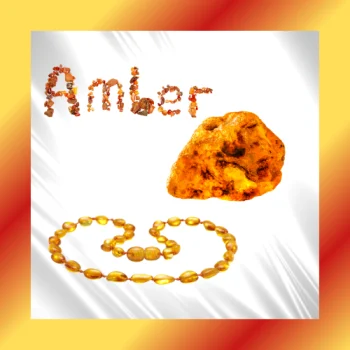
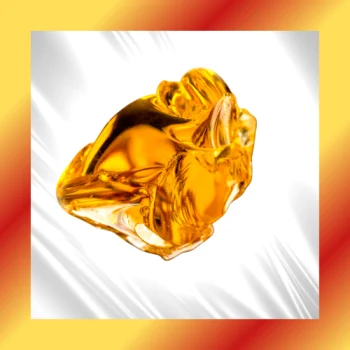
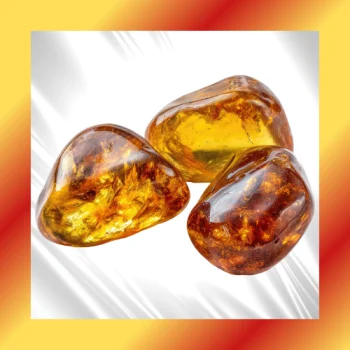
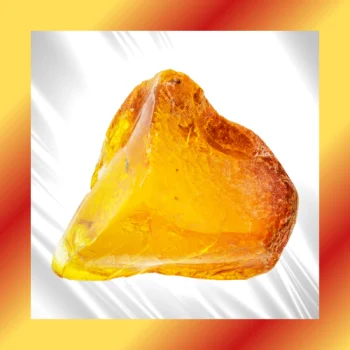
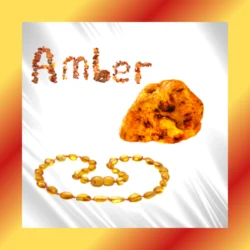
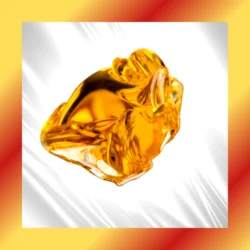
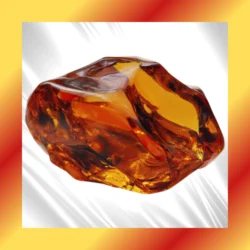
Amber is not a real stone, but a fossil resin produced by trees that lived between 2 and 50 million years ago. Over time, this resin solidified through a long natural process, becoming the glowing, golden substance we know. The most prized varieties are Baltic ambers, which are used not only in jewellery but also for therapeutic purposes and air purification.
.
The Name and Cultural Charm
The name amber comes from the Arabic anbar, which indicated a fragrant substance used in perfumes. Throughout history, different cultures have given it fascinating names: the Greeks called it elektron for its electrostatic properties, the Persians karabe, and for the Romans it was succinum, related to the pine tree Pinus succinifera.
Baltic amber has an important historical value and comes from the territories around the Baltic Sea. The earliest documented uses date back to the Neolithic period in Poland, and as early as the Stone Age it was traded along routes connecting northern Europe to the Mediterranean.
The Roman naturalist Pliny the Elder was among the first to describe it, calling it succinite. The Romans used it to create precious and everyday objects.
Throughout history, Poland was distinguished for its amber production, so much so that it earned the nickname "gold of the North." Danzig, in particular, became a centre of excellence for processing, although it suffered restrictions under Prussian rule. After 1466, the art of amber flourished again.
A symbol of this artistry was the legendary Amber Room, an extraordinary work initially created for the King of Prussia and later donated to Russia. Unfortunately, during World War II, the room was stolen by the Nazis and has since disappeared.
.
A Natural Treasure
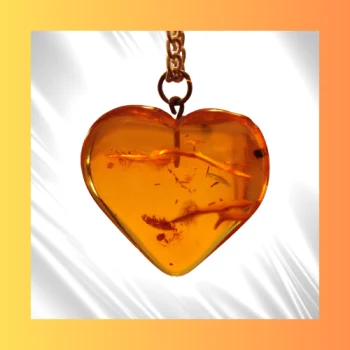
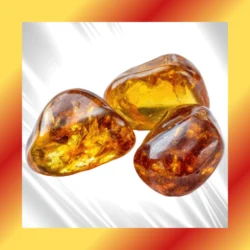
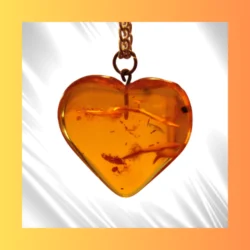
Amber may contain insects or plant fragments trapped millions of years ago, offering a true "snapshot" of the past. Its beauty manifests itself in a range of colours from pale yellow to deep red, including green and blue in some rare specimens.
.
Symbolism and Tradition
In the past it was considered sacred and endowed with magical powers. Greeks and Romans used it in amulets and jewellery. Several legends tell of its origin, including the Greek legend of the amber tears of the Heliades, sisters of Phaethon, being turned into trees after his death. In Poland it is called the gold of the North, and in the Middle Ages the city of Danzig became the centre of amber craftsmanship.
A famous masterpiece made entirely of amber is the Amber Chamber, a gift from the King of Prussia to Tsar Peter the Great, which was lost during World War II.
.
What is Amber
Amber is not an actual stone, but a solidified fossilized resin secreted millions of years ago by conifers such as Pinus succinifera. It is an amorphous organic gemstone, lacking a crystalline structure, that formed between 20 and 50 million years ago (sometimes more). During its formation, it may have trapped insects, plants and other particles, becoming a natural record of the past.
.
Formation and Origin
Amber is found in different parts of the world.
The main deposits are located in:
Baltic Sea (Poland, Russia) - the most valuable (Baltic amber or succinite)
Dominican Republic - famous for clear, green or blue amber
Mexico (Chiapas), Colombia - with gold and blue specimens
Myanmar - dark and bright varieties
Italy (Sicily) - simetite amber, red or fluorescent
Romania, Burma, Canada, USA, Mexico, France, Russia
Baltic amber is considered among the most valuable.
.
Types of amber and similar variants
Copal: Newer resin, not yet fossilized.
Rumenite: Romanian amber rich in sulfur and pyrite, very old.
Jet (or "black amber"): Not amber, but a type of fossil wood, similar in appearance and electrostatic properties.
.
MAIN AMBER VARIETIES
1. Yellow amber (Common amber)
Percentage: About 70% of production.
Origin: Mainly from the Baltic (90% from Kaliningrad, Russia).
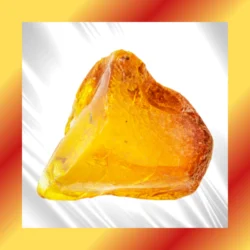
Colour: Yellow, orange, brown (single or multi-coloured).
.
2. Black amber
Percentage: About 15% of production.
Colour: Dark tones of brown or red (not pure black).
Properties: Backlighting reveals brown, red or blue colours.
.
3. Green amber
Percentage: About 2% of production.
Origin: Plant inclusions (often called "earth amber").
Features:
Natural: Yellow-green.
Treated: Dark green.
.
4. White amber
Percentage: 1-2% of production.
Properties: Untreated, presents natural swirls in gray, blue, honey or green.
Other names: "royal white" or "bony."
.
5. Red amber
Percentage: About 0.5% of production.
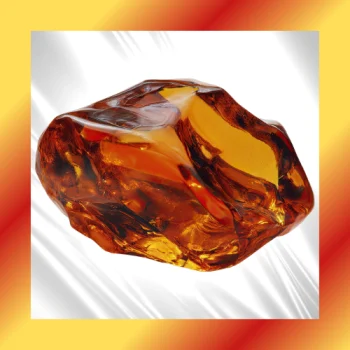
Colour: Rust red, golden red or dark brown.
Feature: the red colour is caused by iron salts attached to the stone.
.
6. Blue amber (the rarest)
Feature: Initial colour yellow or brown.
Property: Turns bright blue under UV light (sun exposure).
Origin: Mainly from the Dominican Republic.
.
Chakra:
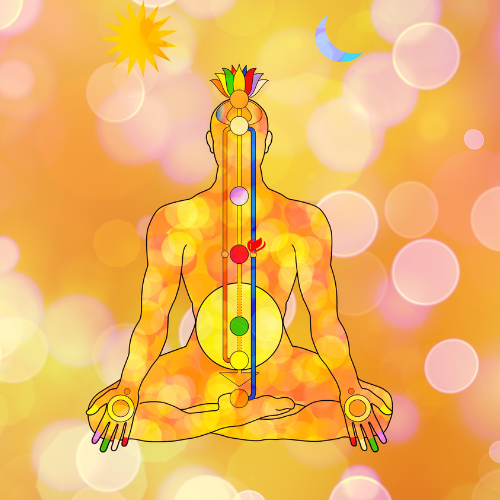
2nd SWADHISTHANA - the sacral
3rd MANIPURA - the solar plexus
4th ANAHATA - the heart
5th VISHUDDHA - the throat
.
PROPERTIES, CHARACTERISTICS AND BENEFITS:
Mineralogical Characteristics
Mohs hardness: 2-2.5 on the Mohs scale (soft).
Colour: Yellow, orange, red, brown, cream, blackish (rarely blue, green, purple).
Crystal structure: Amorphism (no crystal structure).
Gloss: Resinous, transparent or opaque.
Transparency: Transparent to opaque.
Refractive index: 1.54
Density: 1.00-1.10
Fracture: Conchoid (smooth, irregular course).
Luminescence: Fluorescence at times (yellow/blue in UV).
Specific weight: 1.030-1.125 (slightly denser than water).
.
Classification of amber
Colour: Yellow, orange, brown, red (darker = more valuable).
Cut: Usually free-form, cabochon or pearl.
Purity:
AAA: Without inclusions.
A: Small inclusions.
Q: Very numerous inclusions.
Treatments: Heating or dyeing to improve appearance.
.
Energetic and Spiritual Properties
It brings light and warmth to the aura.
It promotes self-confidence, creativity and clear thinking.
Protects against negative energies and outside influences.
It is often used for meditation and grounding.
Fights depression, melancholy, fears.
Enhances charm, promotes love and success.
It acts as an energy shield.
It absorbs and retains energy: it should be purified regularly.
.
Physical Properties and Health
Relieves joint, muscle, rheumatic and teething pains.
Useful for colds, fever, allergies and inflammation.
Promotes detoxification and strengthens the immune system.
.
Symbolic properties and uses
Worn as jewellery to attract good fortune and wealth.
Rubbed between the hands it has a calming and antipyretic effect.
Used in rituals and ceremonies for its sacred aura.
Employed in skin products due to its soothing and purifying properties.
.
ZODIAC SIGNS:
Leo
The ideal stones for Leo are yellow, bright and golden.
Amber is perfect for enhancing their sunny nature.
It fosters friendships, positive relationships and the admiration of others.
Therefore, amber jewellery is a symbolic and suitable gift for those born under this sign.
.
Curiosities
According to tradition, amber protects smokers by reducing nicotine absorption.
It can be combined with essential oils such as chamomile, lavender, pine, and musk.
In Feng Shui, it is recommended in living rooms to increase vital energy (ki).
.
CLEANING AND RECHARGING:
How to clean and store it
Do not expose it to heat or direct sunlight: it may crack or soften.
Avoid chemicals: detergents, perfumes and solvents can damage it.
Recommended cleaning:
Dust with a soft brush.
Wash with warm water and mild soap.
Polish with a soft cloth and a drop of olive oil if necessary.
Categories
View the categories associated with this stone
- FRIENDSHIP
- LOVE
- RINGS
- ARIES
- HARMONY
- WELLNESS
- BRACELETS
- CHAKRA
- 2ND SWADHISTHANA
- 3RD MANIPURA
- 4TH ANAHATA
- 5TH VISHUDDHA
- NECKLACES
- COMMUNICATION
- CREATIVITY
- PROFESSIONAL GROWTH
- LEO
- MEDITATION
- PISCES
- STONES AND ZODIAC
- PROSPERITY
- RELATIONSHIPS
- WEALTH
- SCORPIO
- SUCCESS
- HEALTH
- HEALTH OF THE ENVIRONMENT
- SELF
- ZODIAC
⚠️Important Considerations
Although many people find benefits in the use of crystals, it is fundamental to remember that crystal therapy does not replace traditional medical treatments.
In case of health problems, it is always advisable to consult a qualified health-care professional.


WHO WE ARE