ARCHANGELS:
Ariel, Metatron and Uriel
COLOURS:
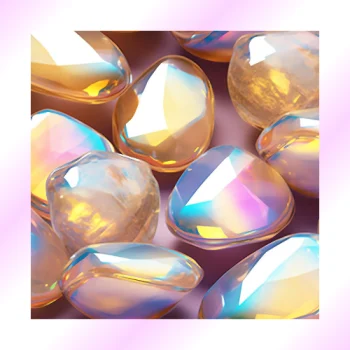
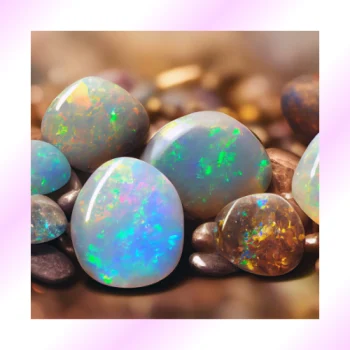
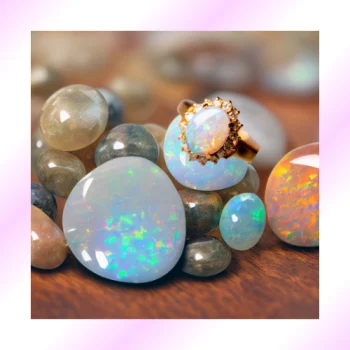
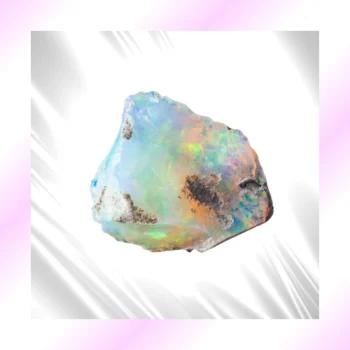
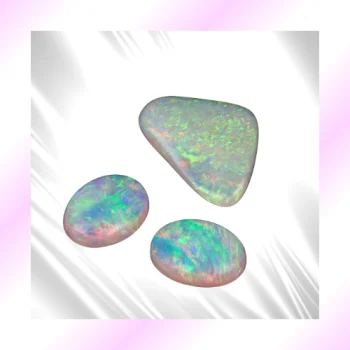
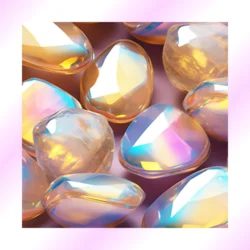
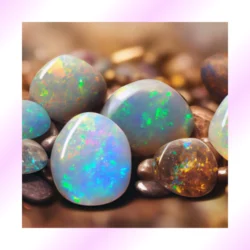
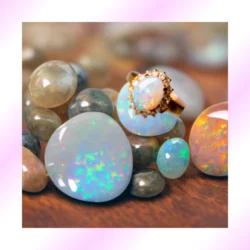
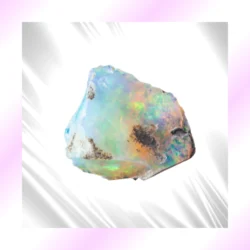
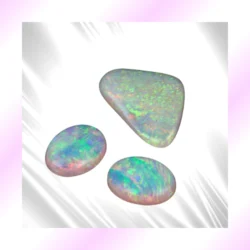
An iridescent range of rainbow colours, white, orange, black, blue, pink and purple, transparent or milky
THE ORIGINS:
History and Origin of Opal
Opal is a fascinating gemstone known for more than 2,000 years. Beloved by various civilizations such as the Romans, Aztecs and Arabs, it is now considered Australia's national stone. What makes it unique is its iridescence, that is, its ability to reflect all the colours of the spectrum, like soap bubbles, constantly changing its appearance.
.
Aboriginal legend
According to the mythology of the Aboriginal Australians of the Euraliah region, the opal was born when the creator of Dreamtime touched the Earth with a rainbow. As the sun rose, the stones began to glow with the colours of the rainbow, giving rise to opals.
.
Etymology and Antiquity
The term "opal" comes from the Latin opalus, in turn from the Sanskrit upala, meaning "precious stone." The Roman scholar Pliny the Elder described opal as a gemstone that combines the beauties of garnet, amethyst and emerald.
A famous anecdote tells of the Roman senator Nonius, who preferred exile rather than surrender a priceless opal ring.
In the 19th century, opal experienced a golden age in Dubnik (now Slovakia). Initially passed off as Indian opal, only later was it recognized as "noble Slovak" opal. Production ended after World War I due to the arrival on the market of more affordable Australian deposits.
In 1840 Professor Johann Menge discovered the first opals in Australia. In the early 1900s, Tullie C. Wollaston made them world famous by traveling to remote areas to purchase and trade them. He is considered the founder of the Australian opal industry.
.
Appreciated by royal families
Opal was much loved by royalty such as Queen Victoria, Tsar Nicholas I and Josephine Bonaparte. It was considered a symbol of luck, vision of the future and magical powers, including invisibility.
.
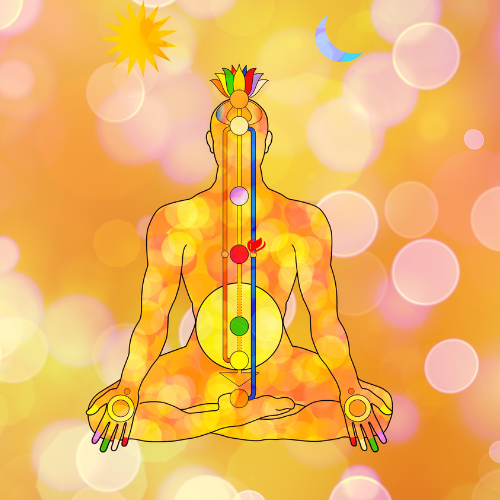
Chakra:
FIRE OPAL 2nd Centre SWADHISTHANA - sacral (energy and passion)
PINK OPAL 4th Centre ANAHATA - the heart, (love - relationships)
BLACK AND BLUE OPAL 5th VISHUDDHA - the centre of the throat, (expressions)
WHITE OPAL 7th SAHASRARA - of the crown, (spiritual connection).
.
PROPERTIES, CHARACTERISTICS AND BENEFITS:
Physical properties:
Mineralogical Characteristics
Composition: hydrated silica (similar to quartz but with water).
System: Amorphous.
Hardness: 5.5 to 6.5 Mohs.
Colour: Varies from white, black, pink, blue, orange.
Main origin: Australia, Ethiopia, Mexico.
.
Physical effects: Body
It purifies the body, helps the lymphatic and respiratory systems.
Stimulates circulation and vitality.
Fire opal is energizing and can support the sexual sphere.
.
Energetic and spiritual properties
Emotions and Mind
It stimulates joy, creativity, imagination.
Helps combat sadness, shame, shyness.
Promotes emotional openness and confidence in the future.
.
Types of Opal
Noble White Opal: The best known. Has clear base and variable iridescence. Highly valued and can have high value.
Noble Black Opal: Discovered in Australia in the 1900s. Has dark background that accentuates the colours. The "harlequin" variety is the most valuable.
Fire Opal: Has no iridescence but has bright colours (yellow, orange, red). Widespread in Mexico. Less expensive.
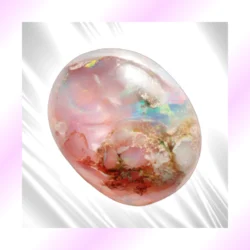
Pink and Blue Opal: Opals without colour plays. Composed of microcrystals, they have low price.
Harlequin Opal: Characterized by well-defined mottled patterns that change colour.
Most expensive opal: Virgin Rainbow: Discovered in 2003 in Australia. It has spectacular iridescence and is valued at over $1 million.
.
Conclusion
Opal is more than just a gemstone: it is a stone full of history, legend, energy and natural beauty. Each variety has its own uniqueness, and it is prized both in jewellery and for its supposed beneficial powers on mind, body and spirit.
.
CLEANING AND RECHARGING:
Cleansing: cold salt water or energetic methods (Reiki, moonlight).
Fragile over time: can leak water and break; must be returned to nature.
It is to be worn, carried or used in meditation (except fire opal for sleeping).