

PEARL



Info and advice
Info and advice
ARCHANGELS:
Haniel
COLOURS:
white and luminous grey-black
THE ORIGINS:
Origin, Meaning and Magic of a Unique Gem
Origin of the name and meaning
The name Pearl derives from the Latin perna (“ham”), referring to the shape of the molluscs that produce it. Only from the 18th century did the term enter common usage. Before that, it was called:
“Union” (from the Latin unio, meaning “unity” or “a single pearl”)
“Margarite,” in Greek and Roman times
Or “marine,” referring to its aquatic origin.
Other cultures, such as the Persian one, called it murwari, meaning “daughter of light” - hence the symbolism associated with purity and innocence.
.
Symbolism, mythology and spirituality
Pearls have always been associated with the moon, water and feminine energy. They represent mystery, purity and elegance.
In Vedic mythology, pearls are born from the union of water and divine energy.
In legends, white pearls symbolize the tears of the gods.
In Christian and Islamic tradition, pearls are an image of paradise and eternal bliss.
In antiquity, it was believed that throwing away a precious pearl was a ritual to attract wealth: whoever can afford to waste it is already rich.
“Pearls of wisdom” evoke intelligence and knowledge.
.
💠 How do pearls form?
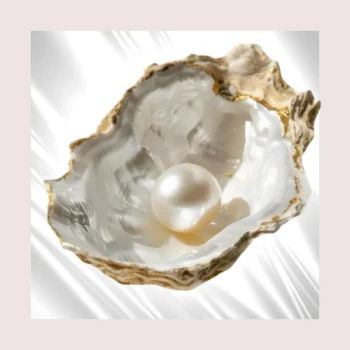
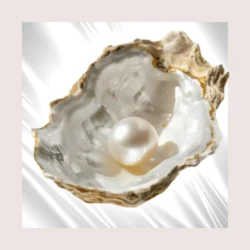
Pearls are not minerals but organic gems: they form inside molluscs (such as oysters or mussels) when a foreign body - like a grain of sand - enters the shell. The mollusc coats it with nacre (calcium carbonate), gradually creating the pearl over time.
.
Origins and sources
Today, natural pearls are rare: most are cultivated on pearl farms. The main sources are:
Salt water: The Indian and Pacific Oceans (especially Tahiti, Australia and the Philippines)
Freshwater: China, Japan, USA
.
Shapes and value
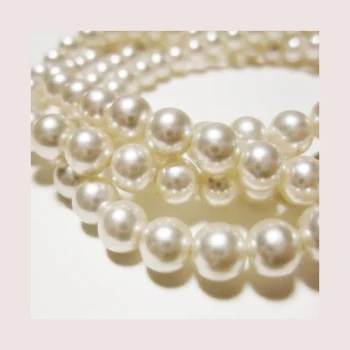
Perfectly round pearls are the most valuable.
Ovoid or semi-round pearls are a more accessible alternative.
Baroque pearls, irregular but unique, are very fashionable today.
.
Prestige and history
Pearls have always been a symbol of power, luxury and social status:
In ancient Rome, they were the most precious possessions; Julius Caesar forbade their use by the lower classes.
Queen Elizabeth I was so fascinated by them that she earned the nickname “The Pearl Queen.”
In the Gospels, Jesus compared them to the Kingdom of Heaven, and the Quran also mentions them as heavenly adornments.
In 1908, Kokichi Mikimoto began modern pearl cultivation, making them widely accessible from the 1960s onward.
.
Chakra:
4th ANAHATA - the heart - (love, empathy, emotional healing)
.
Characteristics and uses
Material: calcium carbonate (aragonite/calcite)
Crystal system: orthorhombic
They are delicate gems, yet durable over time.
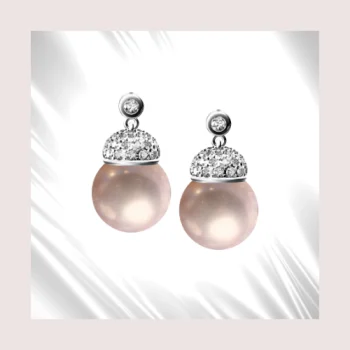
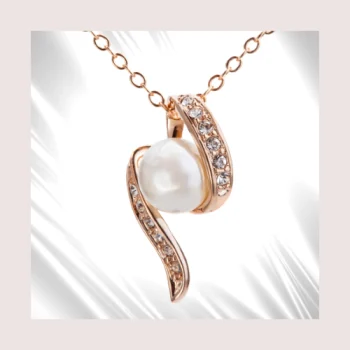
Used in fine jewellery: necklaces, earrings, rings, often for special occasions.
They are also June’s birthstone and are traditionally gifted for the 30th wedding anniversary.
.
PROPERTIES, CHARACTERISTICS AND BENEFITS:
Pearl's Chemical Composition
Pearls form as a defensive reaction of molluscs against an irritant (coral, parasite, etc.).
The mollusc coats the irritant with calcium carbonate (CaCO₃), also known as nacre.
The natural process can take months or years, producing a commercially valuable pearl.
.
Types of Pearls based on source
Akoya Pearls (Pinctada fucata martensi)
Origin: Japan, China, Vietnam
Size: 2–6 mm
Colour: White, pink, cream
Shape: Spherical
High quality, highly valued for their roundness
.
Freshwater Pearls (Hyriopsis Cuingii)
Origin: China, Japan
Various colours and shapes
Often baroque
Solid nacre, more affordable price
.
South Sea Pearls (Pinctada maxima)
Origin: Australia, Indonesia, Philippines
Colour: White, silver, gold
Size: 10-20 mm
Elevated nacre thickness
.
Tahitian Pearls (Pinctada margaritifera)
Origin: Polynesia France
Colour: Black, green, blue, purple, grey
Size: 8-16 mm
Known as "black pearls", highly prized
.
Abalone Pearls
Origin: Haliotis mollusc
Colour: Blue and green iridescence
Shape: Irregular
.
Melo Pearls
Origine: Melo Melo mollusc, South-east Asia
Colour: Orange-brown
Not from oysters, but considered pearls nonetheless
.
Based on formation
Natural Pearls
Formed without human intervention
Extremely rare and expensive
.
Cultured Pearls
Produced by the human insertion of a nucleus into the mollusc
These make up the majority of pearls on the market
.
Salt water Pearls
They form in the sea, inside oysters
Types: Akoya, South Sea, Tahitian
.
Freshwater Pearls
Formed in lakes and rivers
Typical of China
.
Characteristics of Pearls
Physical properties:
Shape:
Spherical (more precious)
Symmetrical (ovals, drops)
Baroque (irregular)
.
Body colour:
White, black, blue, green, grey, gold, cream, pink, purple, orange, plum, chocolate, multicoloured
.
Overtone:
A translucent secondary colour that shifts across the surface
It contributes to the pearl’s beauty and luster
Derived from the Latin “oriens” = rising of the sun
.
Luster:
Bright and pearly appearance
The higher the luster, the greater the quality
.
Purity / Surface texture:
The smoother the surface, the more it reflects light uniformly
.
Size:
From few mm (Akoya) to 20 mm (South Sea)
.
Optical and chemical properties
Crystal structure: Amorphous
Luster: Pearly
Transparency: Opaque
Refractive index: 1.52 – 1.69
Birefringence: 0.156
Cleavage: None
Mineral class: Calcium carbonate / organic
Hardness (Mohs scale): 2.5 – 4.5
.
Treatments for Pearls
Whitening: Sun or hydrogen peroxide (mostly for Akoya)
Colouration: To get black pearls or other shades
Irradiation: Intensifies the colour but reduces the value
Thermal treatments: Increase luster
Coating: To be avoided as it damages luster
.
Spiritual and Energetic Properties
According to crystal therapy, pearl:
It helps fertility and eases childbirth
Supports the heart chakra (Anahata): love, empathy, emotional healing
Improves digestion, reduces acidity and bloating
Strengthens the muscular system
Enhances spiritual connection and inner trust
Promotes calm, reflection and stable relationships
.
CLEANSING AND RECHARGING:
- Wear after make-up and perfume
Clean with a soft cloth after use
Wash with warm water and a neutral soap
Dry on a cloth, far from hard surfaces
Store in airtight containers, away from moisture
Do not wear while cleaning or with chemicals
ARCHANGELS:
Haniel
COLOURS:
white and luminous grey-black
THE ORIGINS:
Origin, Meaning and Magic of a Unique Gem
Origin of the name and meaning
The name Pearl derives from the Latin perna (“ham”), referring to the shape of the molluscs that produce it. Only from the 18th century did the term enter common usage. Before that, it was called:
“Union” (from the Latin unio, meaning “unity” or “a single pearl”)
“Margarite,” in Greek and Roman times
Or “marine,” referring to its aquatic origin.
Other cultures, such as the Persian one, called it murwari, meaning “daughter of light” - hence the symbolism associated with purity and innocence.
.
Symbolism, mythology and spirituality
Pearls have always been associated with the moon, water and feminine energy. They represent mystery, purity and elegance.
In Vedic mythology, pearls are born from the union of water and divine energy.
In legends, white pearls symbolize the tears of the gods.
In Christian and Islamic tradition, pearls are an image of paradise and eternal bliss.
In antiquity, it was believed that throwing away a precious pearl was a ritual to attract wealth: whoever can afford to waste it is already rich.
“Pearls of wisdom” evoke intelligence and knowledge.
.
How do pearls form?
Pearls are not minerals but organic gems: they form inside molluscs (such as oysters or mussels) when a foreign body - like a grain of sand - enters the shell. The mollusc coats it with nacre (calcium carbonate), gradually creating the pearl over time.
.
Origins and sources
Today, natural pearls are rare: most are cultivated on pearl farms. The main sources are:
Salt water: The Indian and Pacific Oceans (especially Tahiti, Australia and the Philippines)
Freshwater: China, Japan, USA
.
Shapes and value
Perfectly round pearls are the most valuable.
Ovoid or semi-round pearls are a more accessible alternative.
Baroque pearls, irregular but unique, are very fashionable today.
.
Prestige and history
Pearls have always been a symbol of power, luxury and social status:
In ancient Rome, they were the most precious possessions; Julius Caesar forbade their use by the lower classes.
Queen Elizabeth I was so fascinated by them that she earned the nickname “The Pearl Queen.”
In the Gospels, Jesus compared them to the Kingdom of Heaven, and the Quran also mentions them as heavenly adornments.
In 1908, Kokichi Mikimoto began modern pearl cultivation, making them widely accessible from the 1960s onward.
.
Chakra:
4th ANAHATA - the heart - (love, empathy, emotional healing)
.
Characteristics and uses
Material: calcium carbonate (aragonite/calcite)
Crystal system: orthorhombic
They are delicate gems, yet durable over time.
Used in fine jewellery: necklaces, earrings, rings, often for special occasions.
They are also June’s birthstone and are traditionally gifted for the 30th wedding anniversary.
.
PROPERTIES, CHARACTERISTICS AND BENEFITS:
Pearl's Chemical Composition
Pearls form as a defensive reaction of molluscs against an irritant (coral, parasite, etc.).
The mollusc coats the irritant with calcium carbonate (CaCO₃), also known as nacre.
The natural process can take months or years, producing a commercially valuable pearl.
.
Types of Pearls based on source
Akoya Pearls (Pinctada fucata martensi)
Origin: Japan, China, Vietnam
Size: 2–6 mm
Colour: White, pink, cream
Shape: Spherical
High quality, highly valued for their roundness
.
Freshwater Pearls (Hyriopsis Cuingii)
Origin: China, Japan
Various colours and shapes
Often baroque
Solid nacre, more affordable price
.
South Sea Pearls (Pinctada maxima)
Origin: Australia, Indonesia, Philippines
Colour: White, silver, gold
Size: 10-20 mm
Elevated nacre thickness
.
Tahitian Pearls (Pinctada margaritifera)
Origin: Polynesia France
Colour: Black, green, blue, purple, grey
Size: 8-16 mm
Known as "black pearls", highly prized
.
Abalone Pearls
Origin: Haliotis mollusc
Colour: Blue and green iridescence
Shape: Irregular
.
Melo Pearls
Origine: Melo Melo mollusc, South-east Asia
Colour: Orange-brown
Not from oysters, but considered pearls nonetheless
.
Based on formation
Natural Pearls
Formed without human intervention
Extremely rare and expensive
.
Cultured Pearls
Produced by the human insertion of a nucleus into the mollusc
These make up the majority of pearls on the market
.
Salt water Pearls
They form in the sea, inside oysters
Types: Akoya, South Sea, Tahitian
.
Freshwater Pearls
Formed in lakes and rivers
Typical of China
.
Characteristics of Pearls
Physical properties:
Shape:
Spherical (more precious)
Symmetrical (ovals, drops)
Baroque (irregular)
.
Body colour:
White, black, blue, green, grey, gold, cream, pink, purple, orange, plum, chocolate, multicoloured
.
Overtone:
A translucent secondary colour that shifts across the surface
It contributes to the pearl’s beauty and luster
Derived from the Latin “oriens” = rising of the sun
.
Luster:
Bright and pearly appearance
The higher the luster, the greater the quality
.
Purity / Surface texture:
The smoother the surface, the more it reflects light uniformly
.
Size:
From few mm (Akoya) to 20 mm (South Sea)
.
Optical and chemical properties
Crystal structure: Amorphous
Luster: Pearly
Transparency: Opaque
Refractive index: 1.52 – 1.69
Birefringence: 0.156
Cleavage: None
Mineral class: Calcium carbonate / organic
Hardness (Mohs scale): 2.5 – 4.5
.
Treatments for Pearls
Whitening: Sun or hydrogen peroxide (mostly for Akoya)
Colouration: To get black pearls or other shades
Irradiation: Intensifies the colour but reduces the value
Thermal treatments: Increase luster
Coating: To be avoided as it damages luster
.
Spiritual and Energetic Properties
According to crystal therapy, pearl:
It helps fertility and eases childbirth
Supports the heart chakra (Anahata): love, empathy, emotional healing
Improves digestion, reduces acidity and bloating
Strengthens the muscular system
Enhances spiritual connection and inner trust
Promotes calm, reflection and stable relationships
.
CLEANSING AND RECHARGING:
- Wear after make-up and perfume
Clean with a soft cloth after use
Wash with warm water and a neutral soap
Dry on a cloth, far from hard surfaces
Store in airtight containers, away from moisture
Do not wear while cleaning or with chemicals
Categories
See the categories linked to this stone




⚠️ Important Considerations
Although many people find benefits in using crystals, it is important to remember that crystal healing does not replace traditional medical care.
In case of health issues, it is always advisable to consult a qualified healthcare professional.
⚠️ Important Considerations
Although many people find benefits in using crystals, it is important to remember that crystal healing does not replace traditional medical care.
In case of health issues, it is always advisable to consult a qualified healthcare professional.